2 GST Penalties Explained creaet iamge for this

GST Penalties Explained

Introduction

Complying with Goods and Services Tax (GST) regulations is essential for every registered business in India. Failing to meet GST obligations, such as timely registration, return filing, tax payment, or maintaining proper records, can result in penalties, interest, and legal consequences. Understanding the common GST penalties helps businesses stay compliant and avoid unnecessary financial losses.

This guide explains the major GST penalties, their causes, and how businesses can prevent them.


What Are GST Penalties?

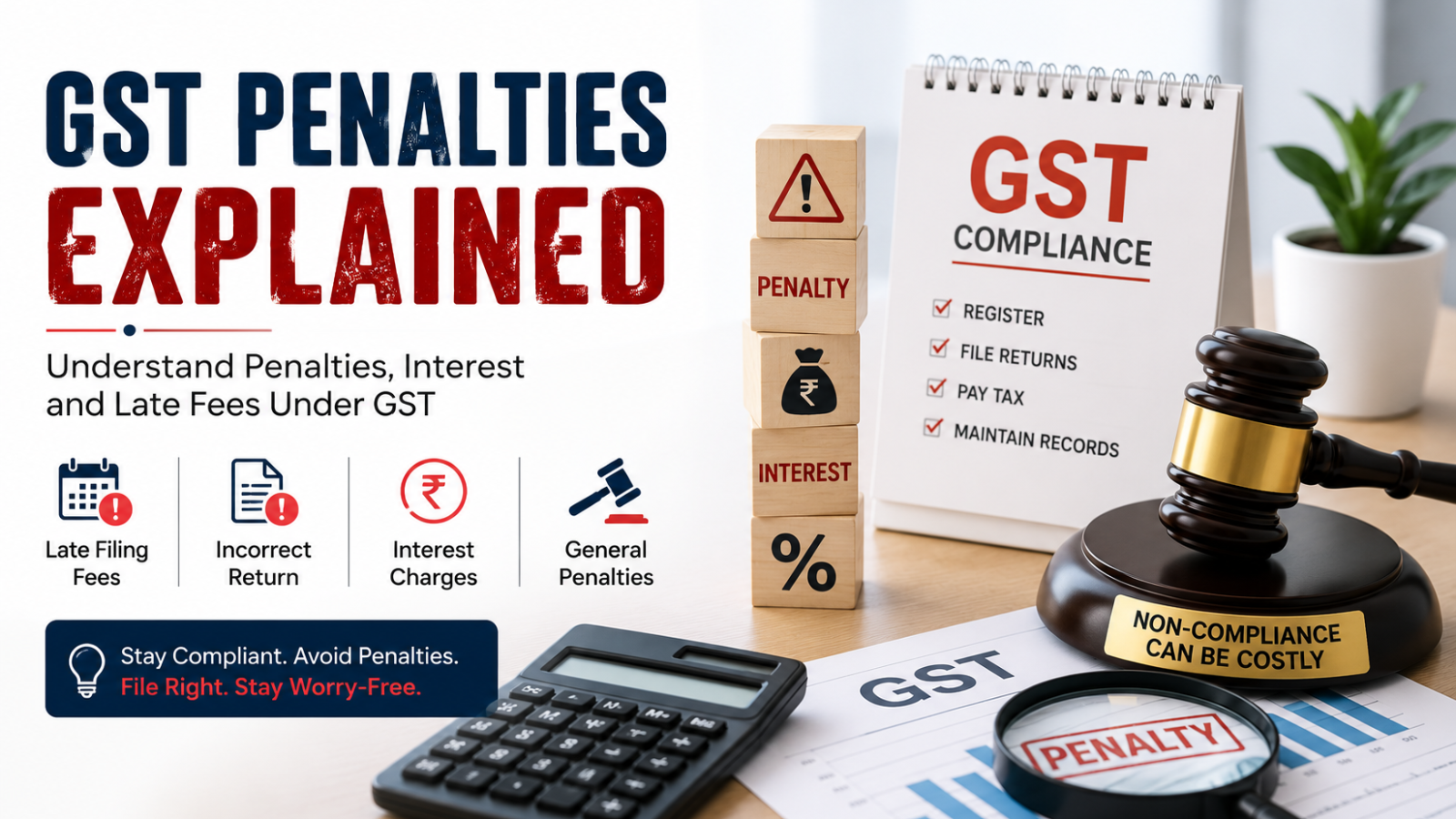
GST penalties are charges imposed on businesses or taxpayers for violating the provisions of the GST law. These penalties may arise due to delayed return filing, late tax payments, incorrect information, non-registration, or other compliance failures. The amount of penalty depends on the nature and severity of the violation.


Common Reasons for GST Penalties

Businesses may face GST penalties for several reasons, including:

  1. Failure to register under GST when registration is mandatory.
  2. Late filing of GST returns.
  3. Delay in payment of GST liability.
  4. Issuing incorrect or incomplete tax invoices.
  5. Claiming ineligible Input Tax Credit (ITC).
  6. Providing incorrect information in GST returns.
  7. Failure to maintain proper books of accounts.
  8. Non-compliance during GST assessments or inspections.

Late Filing of GST Returns

One of the most common reasons for GST penalties is filing GST returns after the prescribed due date. Delayed filing can lead to late fees and may also affect the ability to claim or pass on Input Tax Credit. Regular monitoring of filing deadlines helps businesses avoid unnecessary charges.


Delay in GST Payment

If GST is not paid within the prescribed time, interest is generally applicable on the outstanding tax amount until payment is made. Delayed tax payments can also lead to additional compliance issues if ignored for an extended period.


Failure to Obtain GST Registration

Businesses that are required to register under GST but continue operating without registration may face penalties and other legal actions. It is important to determine eligibility for GST registration and complete the registration process as soon as the business becomes liable.


Incorrect GST Returns

Submitting GST returns with incorrect turnover, tax calculations, or Input Tax Credit claims can result in notices, additional tax demands, penalties, or the need to file corrections. Businesses should always verify their financial records before filing returns.


Incorrect Claim of Input Tax Credit (ITC)

Input Tax Credit can only be claimed if all prescribed conditions are satisfied. Claiming ITC without valid tax invoices or on ineligible purchases may result in reversal of the credit along with applicable interest and penalties.


Failure to Maintain Proper Records

Every registered business is required to maintain proper books of accounts, invoices, purchase records, sales records, and GST-related documents. Inadequate record keeping can create difficulties during assessments or audits and may attract penalties under GST provisions.


How to Avoid GST Penalties

Businesses can significantly reduce the risk of GST penalties by following a few simple practices:

  1. Register under GST as soon as it becomes applicable.
  2. File GST returns before the due date.
  3. Pay GST liability on time.
  4. Maintain accurate books of accounts.
  5. Verify invoices before claiming Input Tax Credit.
  6. Reconcile GST records regularly.
  7. Keep all GST documents properly organized.
  8. Seek professional advice whenever required.

Importance of GST Compliance

Regular GST compliance not only helps businesses avoid penalties but also improves financial transparency and credibility. Timely filing of returns, accurate tax reporting, and proper documentation create a strong compliance record and reduce the likelihood of notices from tax authorities.

Businesses with consistent compliance are also better prepared for audits, assessments, and future business expansion.


Why Professional Assistance Matters

GST regulations are updated from time to time, making compliance challenging for many businesses. A Chartered Accountant can help ensure timely return filing, accurate tax calculations, proper Input Tax Credit claims, maintenance of statutory records, and compliance with the latest GST provisions. Professional guidance minimizes errors and helps businesses avoid unnecessary penalties.


Conclusion

GST penalties can often be avoided through timely compliance and proper financial management. Filing returns on time, paying taxes within the prescribed deadlines, maintaining accurate records, and reporting correct information are essential for every registered business. By following good compliance practices and seeking professional assistance when needed, businesses can operate confidently while avoiding unnecessary financial and legal complications.
3 GST registration step-by-step guide

GST Registration Complete Step-by-Step Guide

Introduction

Goods and Services Tax (GST) registration is one of the first compliance requirements for businesses that meet the prescribed eligibility criteria. A GST registration allows businesses to collect GST from customers, claim Input Tax Credit (ITC), and operate legally under the GST framework.

Whether you are starting a new business or expanding an existing one, understanding the GST registration process can help you avoid delays and ensure smooth compliance with tax regulations.


What is GST Registration?

GST registration is the process through which a business obtains a unique Goods and Services Tax Identification Number (GSTIN) from the tax authorities. Once registered, the business becomes a recognized GST taxpayer and is required to comply with GST rules, including filing returns, maintaining records, and paying applicable taxes.


Who Should Register for GST?

GST registration is mandatory for businesses and individuals who meet the prescribed turnover limits or fall under categories where registration is compulsory under GST law. It is also required for businesses involved in interstate supply, e-commerce operations, import or export activities, and certain notified services.

Even if registration is not mandatory, many businesses choose voluntary registration to improve credibility and claim Input Tax Credit.


Benefits of GST Registration

Registering under GST offers several advantages to businesses.

  1. Operate legally under the GST system.
  2. Claim Input Tax Credit on eligible purchases.
  3. Expand business across different states.
  4. Improve business credibility with customers and suppliers.
  5. Participate in government and corporate tenders.
  6. Avoid penalties for non-compliance where registration is mandatory.

Documents Required for GST Registration

Before applying for GST registration, keep the following documents ready:

  1. PAN Card of the business or applicant.
  2. Aadhaar Card.
  3. Business registration proof.
  4. Identity and address proof of promoters or partners.
  5. Passport-size photographs.
  6. Business address proof.
  7. Bank account details or cancelled cheque.
  8. Digital Signature Certificate (where applicable).
  9. Authorization letter or board resolution, if required.

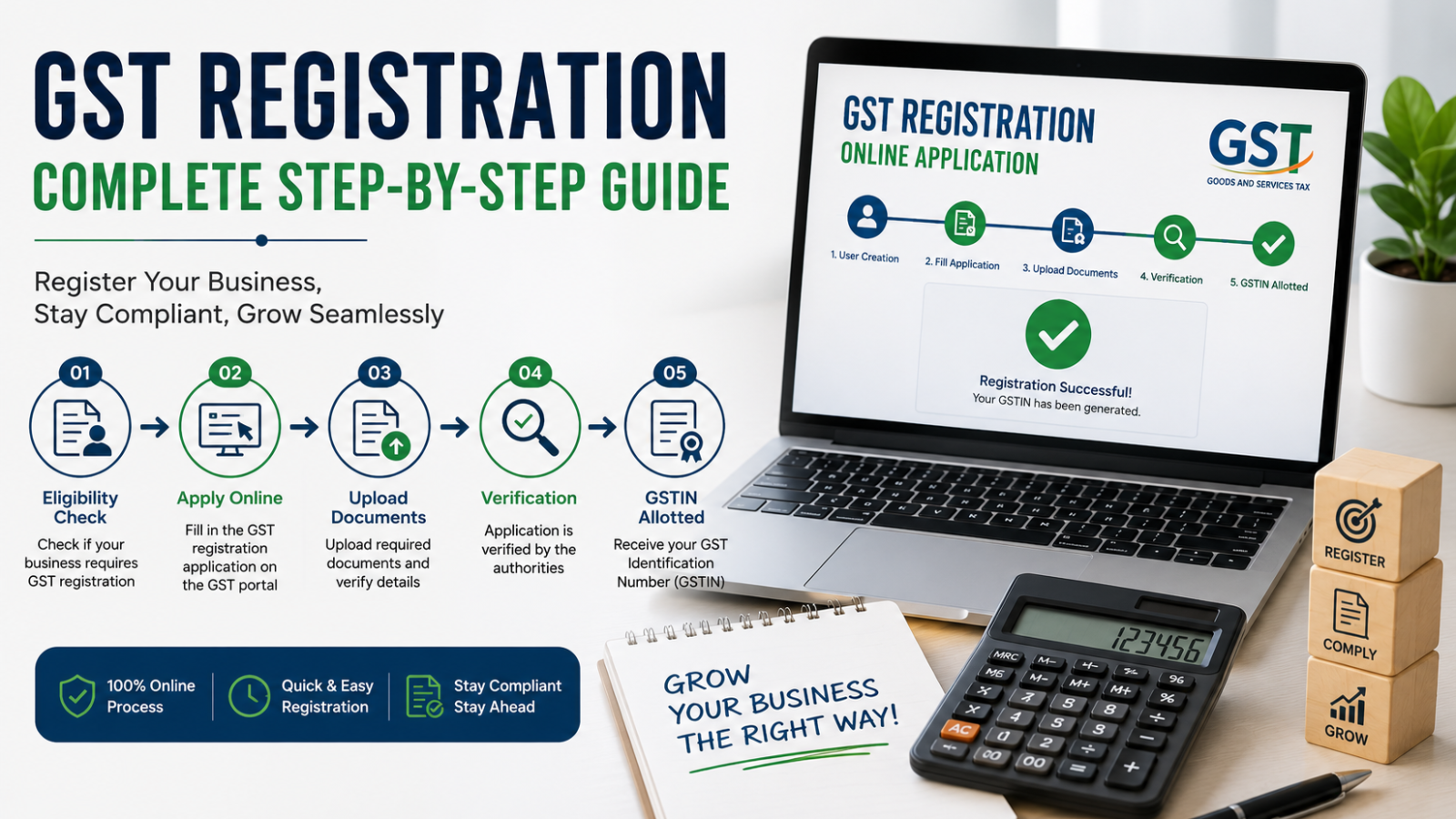
Step-by-Step GST Registration Process

Step 1: Check Your Eligibility

Determine whether your business is required to register under GST based on turnover, business activity, and applicable legal provisions.


Step 2: Collect Required Documents

Gather all necessary business and personal documents before beginning the registration process. Accurate documentation helps avoid delays.


Step 3: Complete the GST Registration Application

Fill in the registration application with correct business details, contact information, business activities, bank details, and authorized signatory information.


Step 4: Upload Supporting Documents

Upload all required documents in the prescribed format. Ensure that the uploaded documents are clear, valid, and match the information provided in the application.


Step 5: Verification of Application

The submitted application is verified by the concerned tax authority. If additional information or clarification is required, the applicant may need to respond within the specified timeline.


Step 6: Receive GSTIN

Once the application is approved, the business receives a unique GST Identification Number (GSTIN) and the GST Registration Certificate, allowing it to conduct business as a registered GST taxpayer.


Responsibilities After GST Registration

After obtaining GST registration, businesses are required to comply with various GST obligations. These include issuing GST-compliant invoices, filing GST returns within the prescribed due dates, maintaining proper books of accounts, paying applicable taxes on time, and preserving business records as required under GST law.


Common Mistakes to Avoid

Many businesses face delays because of incorrect information or incomplete documentation during the registration process. Common mistakes include providing inaccurate business details, uploading invalid documents, entering incorrect bank information, selecting the wrong business category, or failing to respond to queries raised during application verification.

Carefully reviewing the application before submission helps ensure faster approval.


Why Professional Assistance is Beneficial

Although the GST registration process is straightforward, businesses often require professional guidance to determine eligibility, prepare documentation, select the correct business classification, and ensure compliance with GST regulations. A Chartered Accountant can assist with the registration process while helping businesses avoid errors that may lead to delays or future compliance issues.


Conclusion

GST registration is an important step for businesses operating under India’s indirect tax system. It not only ensures legal compliance but also enables businesses to claim Input Tax Credit, expand operations, and build trust with customers and suppliers. By understanding the registration process, maintaining accurate documentation, and complying with GST requirements, businesses can complete registration smoothly and focus on long-term growth.

1 What happens if you miss the deadline

What Happens If You Miss the ITR Filing Deadline?

Introduction

Filing your Income Tax Return (ITR) before the due date is one of the most important tax compliance responsibilities for every taxpayer. However, due to busy schedules, incomplete documentation, or lack of awareness, many individuals and businesses fail to file their returns on time. Missing the deadline may seem like a small delay, but it can lead to financial penalties, interest on unpaid taxes, and the loss of certain tax benefits.

Understanding the consequences of late ITR filing can help taxpayers take timely action and avoid unnecessary compliance issues.


Why Filing Your ITR on Time Matters

Timely ITR filing is more than just a legal obligation. It creates a transparent financial record that is often required while applying for loans, visas, government tenders, and financial assistance. Filing on time also ensures faster processing of tax refunds and demonstrates responsible financial management.

Delaying your return not only affects your compliance status but may also increase your overall tax burden.


Financial Consequences of Late Filing

One of the immediate effects of missing the ITR deadline is the possibility of additional financial liability. Depending on the applicable provisions of the Income-tax Act, taxpayers may become liable to pay late filing fees, interest on outstanding taxes, and other charges.

If taxes remain unpaid, interest may continue to accumulate until the outstanding amount is cleared, making the overall liability significantly higher than expected.


Delay in Receiving Tax Refunds

Taxpayers who are eligible for refunds often experience delays if their returns are filed after the due date. Since refund processing begins only after successful filing and verification, late submission automatically postpones the refund process.

For businesses and individuals depending on timely refunds to manage cash flow, these delays can create unnecessary financial pressure.


Loss of Certain Tax Benefits

Late filing may also affect a taxpayer’s ability to carry forward certain eligible business or capital losses to future financial years. These losses are often useful for reducing future tax liabilities, making timely filing an important aspect of long-term tax planning.

Missing the deadline may therefore increase future tax costs.


Increased Chances of Tax Notices

When Income Tax Returns are not filed within the prescribed timeline, the Income Tax Department may seek clarification regarding undisclosed income, tax deductions, or pending compliance. Although every delayed return does not result in a notice, maintaining timely compliance significantly reduces unnecessary scrutiny.


How to Minimize the Impact

If you have missed the filing deadline, the best approach is to complete the filing process as early as possible instead of delaying it further. Organize all financial documents, calculate your tax liability accurately, clear any pending tax dues, and ensure proper verification after submission.

Taking immediate corrective action helps minimize additional financial consequences.


The Importance of Professional Assistance

Late ITR filing often involves additional compliance requirements and tax calculations. Chartered Accountants help taxpayers calculate interest and penalties accurately, prepare revised tax computations where required, respond to departmental notices, and complete pending filings while ensuring compliance with the latest tax regulations.

Professional guidance helps reduce errors and provides peace of mind during the filing process.


Conclusion

Missing the ITR filing deadline does not mean the situation cannot be corrected, but delaying it further can increase financial and legal consequences. Filing your return as soon as possible, maintaining proper documentation, and seeking professional guidance where necessary can help restore compliance and minimize unnecessary costs.

12

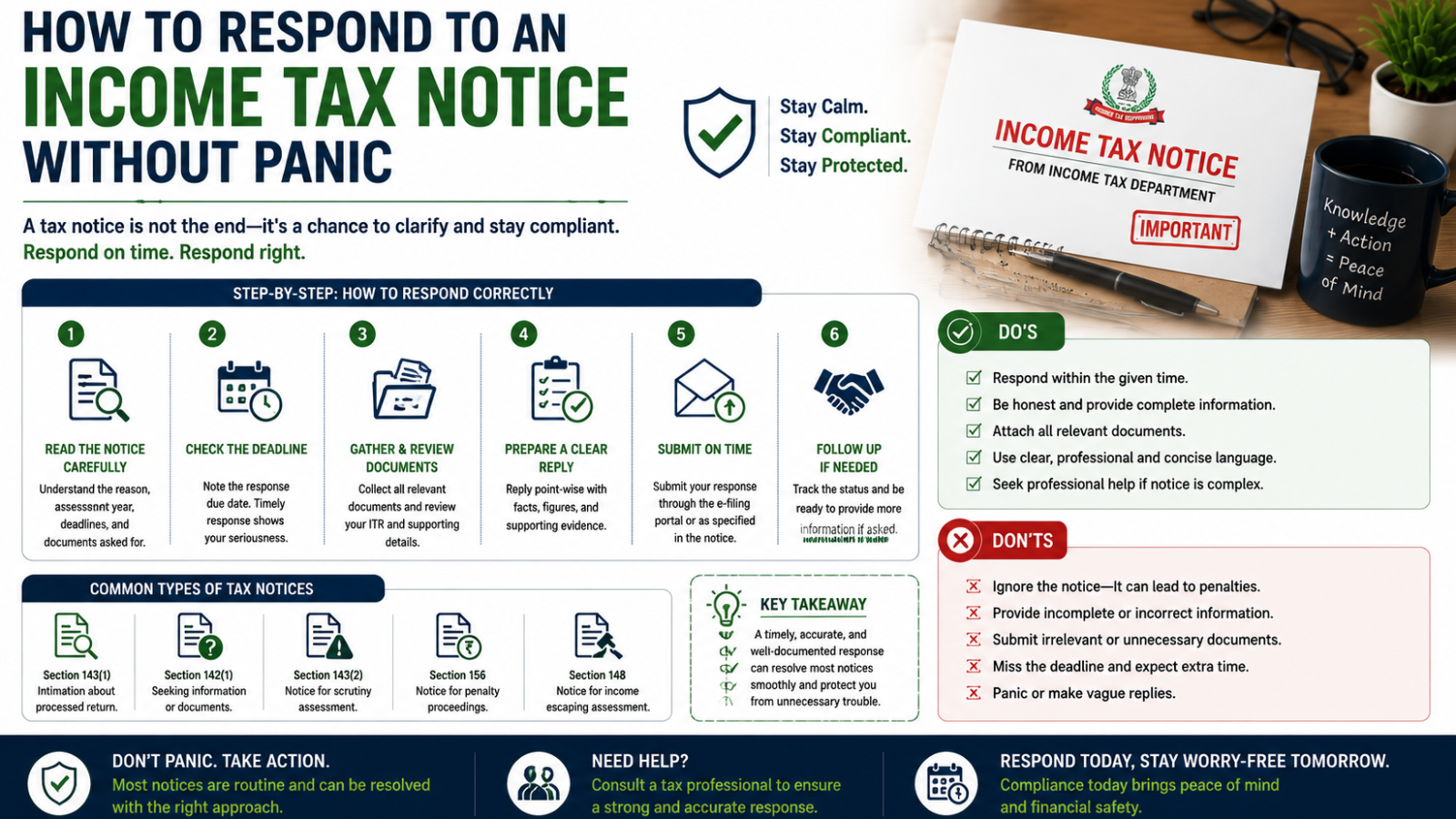
How to Respond to an Income Tax Notice Without Panic

Introduction

Receiving an Income Tax notice can be stressful, especially for taxpayers who are unfamiliar with tax procedures. However, an Income Tax notice does not always indicate a serious problem. In many cases, notices are issued simply to seek clarification, verify information, or request additional documents related to a filed return.

Understanding why notices are issued and responding appropriately helps taxpayers resolve matters quickly while avoiding unnecessary complications.


Why Income Tax Notices Are Issued

The Income Tax Department may issue notices for several reasons, including mismatches in reported income, incorrect deduction claims, undisclosed financial transactions, pending tax payments, incomplete information, or routine verification of tax returns.

Many notices are informational in nature and can be resolved by providing the requested details within the prescribed time.


Stay Calm and Read the Notice Carefully

The first step after receiving an Income Tax notice is to read it thoroughly. Every notice clearly mentions the reason for communication, the assessment year involved, the information required, and the response deadline.

Ignoring the notice or responding without understanding its purpose may create unnecessary complications.


Verify the Information

Before preparing your response, compare the details mentioned in the notice with your Income Tax Return, bank statements, Form 16, tax payment records, investment proofs, and other financial documents. This helps identify whether the issue is due to an actual mistake or a simple mismatch in records.

Proper verification prevents incorrect responses.


Prepare Supporting Documents

If the notice requests clarification, gather all supporting documents relevant to the issue. These may include salary records, bank statements, tax deduction certificates, investment proofs, capital gain statements, business financial records, or any other documents supporting your tax return.

Well-organized documentation helps resolve the matter efficiently.


Respond Within the Prescribed Timeline

Responding within the specified deadline is extremely important. Delayed responses may result in additional notices, penalties, or further proceedings. Even if additional time is required, taxpayers should not ignore official communication from the Income Tax Department.

Timely communication demonstrates compliance and reduces unnecessary complications.


Avoid Common Mistakes

Many taxpayers make the mistake of ignoring notices, submitting incomplete information, or responding without verifying their records. These actions may prolong the resolution process and increase compliance risks.

Carefully reviewing all information before submitting a response helps avoid further issues.


How Professional Assistance Helps

Income Tax notices often involve technical legal and financial matters that require expert interpretation. Chartered Accountants assist taxpayers in understanding the notice, preparing appropriate responses, organizing supporting documents, representing clients before tax authorities where required, and ensuring complete compliance with tax regulations.

Professional advice significantly reduces the chances of incorrect responses and unnecessary litigation.


Conclusion

Receiving an Income Tax notice should not be viewed as a reason to panic. Most notices can be resolved smoothly through proper documentation, accurate responses, and timely compliance. Understanding the reason behind the notice and seeking professional guidance when required ensures that taxpayers can address the matter confidently while protecting their financial interests.