
Introduction
Receiving an Income Tax notice can be stressful, especially for taxpayers who are unfamiliar with tax procedures. However, an Income Tax notice does not always indicate a serious problem. In many cases, notices are issued simply to seek clarification, verify information, or request additional documents related to a filed return.
Understanding why notices are issued and responding appropriately helps taxpayers resolve matters quickly while avoiding unnecessary complications.
Why Income Tax Notices Are Issued
The Income Tax Department may issue notices for several reasons, including mismatches in reported income, incorrect deduction claims, undisclosed financial transactions, pending tax payments, incomplete information, or routine verification of tax returns.
Many notices are informational in nature and can be resolved by providing the requested details within the prescribed time.
Stay Calm and Read the Notice Carefully
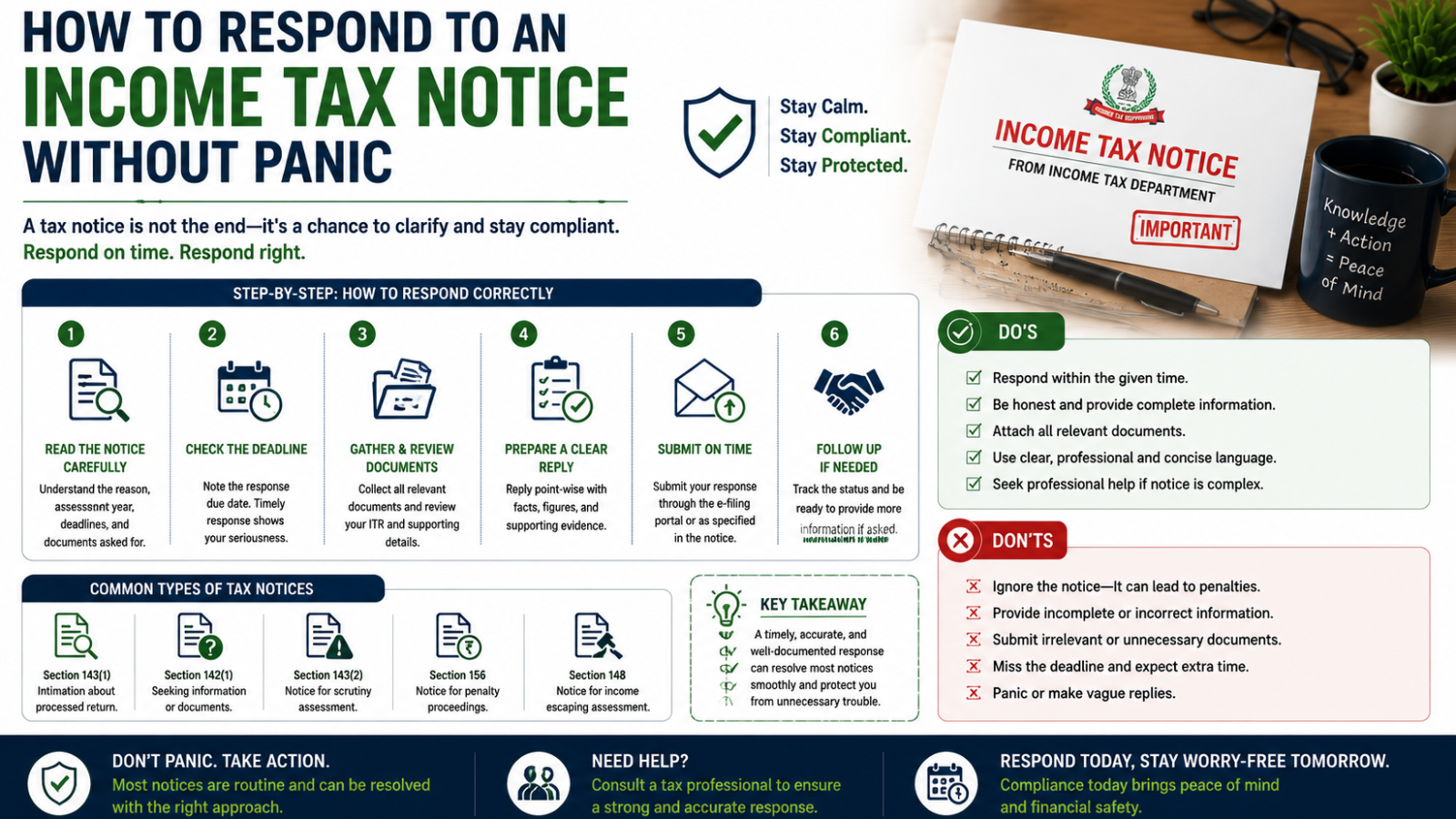
The first step after receiving an Income Tax notice is to read it thoroughly. Every notice clearly mentions the reason for communication, the assessment year involved, the information required, and the response deadline.
Ignoring the notice or responding without understanding its purpose may create unnecessary complications.
Verify the Information
Before preparing your response, compare the details mentioned in the notice with your Income Tax Return, bank statements, Form 16, tax payment records, investment proofs, and other financial documents. This helps identify whether the issue is due to an actual mistake or a simple mismatch in records.
Proper verification prevents incorrect responses.
Prepare Supporting Documents
If the notice requests clarification, gather all supporting documents relevant to the issue. These may include salary records, bank statements, tax deduction certificates, investment proofs, capital gain statements, business financial records, or any other documents supporting your tax return.
Well-organized documentation helps resolve the matter efficiently.
Respond Within the Prescribed Timeline
Responding within the specified deadline is extremely important. Delayed responses may result in additional notices, penalties, or further proceedings. Even if additional time is required, taxpayers should not ignore official communication from the Income Tax Department.
Timely communication demonstrates compliance and reduces unnecessary complications.
Avoid Common Mistakes
Many taxpayers make the mistake of ignoring notices, submitting incomplete information, or responding without verifying their records. These actions may prolong the resolution process and increase compliance risks.
Carefully reviewing all information before submitting a response helps avoid further issues.
How Professional Assistance Helps
Income Tax notices often involve technical legal and financial matters that require expert interpretation. Chartered Accountants assist taxpayers in understanding the notice, preparing appropriate responses, organizing supporting documents, representing clients before tax authorities where required, and ensuring complete compliance with tax regulations.
Professional advice significantly reduces the chances of incorrect responses and unnecessary litigation.
Conclusion
Receiving an Income Tax notice should not be viewed as a reason to panic. Most notices can be resolved smoothly through proper documentation, accurate responses, and timely compliance. Understanding the reason behind the notice and seeking professional guidance when required ensures that taxpayers can address the matter confidently while protecting their financial interests.

Add a Comment