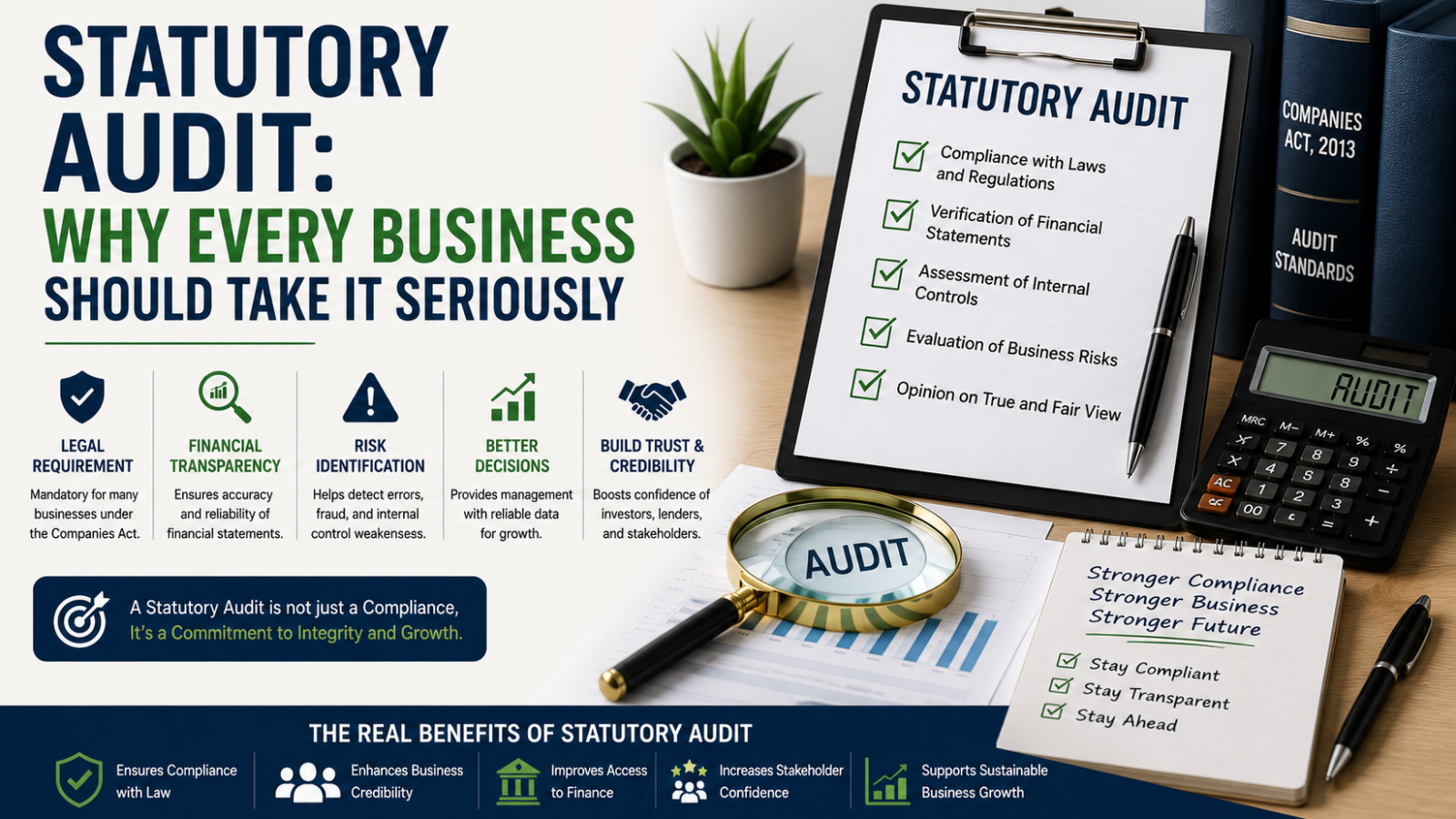
6 Statutory Audit Why Every Business

Statutory Audit: Why Every Business Should Take It Seriously

The Growing Importance of Financial Transparency

Running a business today is not just about increasing sales and profits. Businesses are expected to maintain accurate financial records, comply with regulatory requirements, and build trust with investors, banks, and government authorities. This is where a statutory audit plays an important role. It provides an independent review of a company’s financial records and assures stakeholders that the financial statements are reliable and prepared according to applicable laws.


More Than Just a Legal Requirement

Many business owners consider statutory audits only as a mandatory compliance activity. In reality, an audit offers much more than regulatory compliance. It highlights weaknesses in financial reporting, identifies accounting errors, improves internal controls, and helps management make informed business decisions. A well-conducted audit strengthens the credibility of a business and builds confidence among investors, lenders, and customers.


Strengthening Business Operations

Every financial transaction reflects the health of a business. During a statutory audit, accounting records, invoices, bank statements, tax records, and supporting documents are examined to ensure accuracy. This process often uncovers areas where financial controls can be improved. Businesses that regularly review their financial systems are better prepared for growth and are less likely to face compliance issues in the future.


Building Trust with Banks and Investors

Financial institutions and investors prefer businesses that maintain transparent and audited financial statements. Whether applying for a business loan, attracting investors, or participating in government tenders, audited financial statements create confidence and demonstrate responsible financial management. They also reduce the risk of disputes arising from inaccurate financial reporting.


Avoiding Costly Compliance Issues

Small accounting errors or missing documentation can lead to penalties, regulatory notices, and unnecessary delays. Regular statutory audits help identify these issues before they become significant problems. Businesses that maintain organized financial records and comply with legal requirements are better positioned to handle audits smoothly and avoid unnecessary financial risks.


Professional Guidance Makes the Difference

Preparing for a statutory audit requires careful planning and accurate documentation. Chartered Accountants assist businesses in maintaining proper books of accounts, reviewing financial statements, ensuring statutory compliance, and resolving accounting discrepancies before the audit begins. Professional support helps businesses complete the audit process efficiently while maintaining complete regulatory compliance.


Conclusion

A statutory audit should not be viewed merely as a legal obligation. It is an opportunity to strengthen financial management, improve operational efficiency, and build long-term business credibility. Businesses that invest in transparent accounting practices and regular audits are better equipped to achieve sustainable growth while maintaining the confidence of customers, investors, financial institutions, and regulatory authorities.


7 Cash Flow Management

Cash Flow Management: The Key to Sustainable Business Growth

Introduction

Profit is important, but cash keeps a business running. Many businesses appear profitable on paper yet struggle to pay suppliers, employees, or operating expenses because of poor cash flow management. A healthy cash flow ensures that a business has enough funds to meet its day-to-day obligations while also investing in future growth opportunities.

Whether you are a startup, MSME, or an established company, understanding and managing your cash flow is essential for long-term financial stability.


Why Cash Flow Matters More Than You Think

Every business experiences money coming in through sales and going out through operational expenses. When this movement of cash is not monitored properly, even a growing business can face financial pressure. Delayed customer payments, rising expenses, or poor financial planning can quickly create liquidity problems that affect the entire operation.

Maintaining a positive cash flow allows businesses to operate confidently, pay bills on time, and respond quickly to new opportunities without depending heavily on external financing.


Understanding Positive and Negative Cash Flow

Positive cash flow means the business is generating more cash than it spends, providing the flexibility to invest, expand, and build financial reserves. On the other hand, negative cash flow occurs when expenses consistently exceed incoming cash, making it difficult to manage daily operations and financial commitments.

While temporary negative cash flow may occur during expansion or seasonal fluctuations, long-term cash shortages require immediate attention and corrective planning.


Common Reasons Behind Cash Flow Problems

Cash flow challenges often arise from delayed customer collections, excessive inventory, uncontrolled operating expenses, poor budgeting, or ineffective credit management. Many businesses focus only on increasing sales while overlooking how quickly those sales are converted into actual cash.

Without regular monitoring, these issues can gradually reduce working capital and limit business growth.


Building a Strong Cash Flow Strategy

Effective cash flow management starts with understanding where money is coming from and where it is being spent. Businesses should regularly monitor receivables, control unnecessary expenses, prepare monthly cash flow forecasts, and maintain sufficient working capital to handle unexpected situations.

Reviewing financial reports on a regular basis allows management to identify trends, anticipate future cash requirements, and make better financial decisions before problems arise.


Cash Flow and Business Growth Go Hand in Hand

Healthy cash flow gives businesses the confidence to expand operations, purchase new equipment, hire skilled employees, and invest in technology. It also improves relationships with suppliers by ensuring timely payments and strengthens credibility with banks and investors.

Businesses with consistent cash flow are better prepared to manage economic uncertainty and take advantage of new market opportunities without disrupting their operations.


Financial Planning Makes a Difference

Cash flow management is most effective when supported by proper financial planning. Preparing budgets, monitoring actual expenses against planned expenses, and forecasting future income help businesses stay financially organized throughout the year.

Regular financial reviews also enable business owners to identify unnecessary costs, improve profitability, and allocate resources more efficiently.


The Value of Professional Financial Guidance

Managing cash flow becomes more challenging as a business grows. Professional financial guidance helps businesses prepare accurate cash flow statements, analyze financial performance, improve working capital management, and develop strategies that support sustainable growth.

A Chartered Accountant can provide valuable insights that help businesses maintain financial discipline while making informed decisions based on reliable financial data.


Conclusion

Cash flow management is one of the most important aspects of running a successful business. Strong sales alone are not enough if cash is not available when it is needed. Businesses that actively monitor cash flow, control expenses, and plan their finances are better positioned to overcome financial challenges and achieve long-term growth.

By treating cash flow as a strategic priority rather than just an accounting function, businesses can build stronger financial foundations, improve operational efficiency, and create opportunities for sustained success.