
The Growing Importance of Financial Transparency
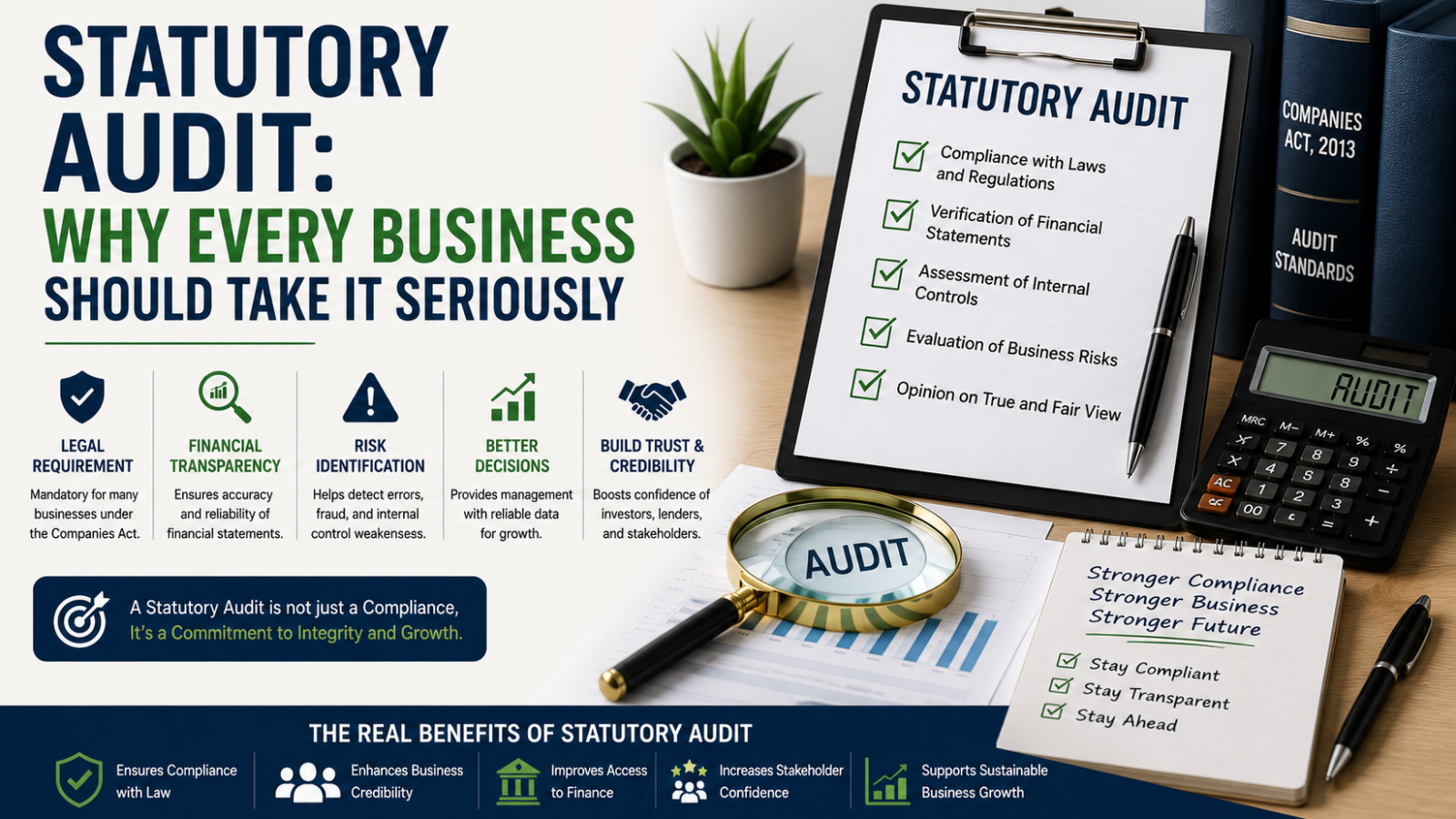
Running a business today is not just about increasing sales and profits. Businesses are expected to maintain accurate financial records, comply with regulatory requirements, and build trust with investors, banks, and government authorities. This is where a statutory audit plays an important role. It provides an independent review of a company’s financial records and assures stakeholders that the financial statements are reliable and prepared according to applicable laws.
More Than Just a Legal Requirement
Many business owners consider statutory audits only as a mandatory compliance activity. In reality, an audit offers much more than regulatory compliance. It highlights weaknesses in financial reporting, identifies accounting errors, improves internal controls, and helps management make informed business decisions. A well-conducted audit strengthens the credibility of a business and builds confidence among investors, lenders, and customers.
Strengthening Business Operations
Every financial transaction reflects the health of a business. During a statutory audit, accounting records, invoices, bank statements, tax records, and supporting documents are examined to ensure accuracy. This process often uncovers areas where financial controls can be improved. Businesses that regularly review their financial systems are better prepared for growth and are less likely to face compliance issues in the future.
Building Trust with Banks and Investors
Financial institutions and investors prefer businesses that maintain transparent and audited financial statements. Whether applying for a business loan, attracting investors, or participating in government tenders, audited financial statements create confidence and demonstrate responsible financial management. They also reduce the risk of disputes arising from inaccurate financial reporting.
Avoiding Costly Compliance Issues
Small accounting errors or missing documentation can lead to penalties, regulatory notices, and unnecessary delays. Regular statutory audits help identify these issues before they become significant problems. Businesses that maintain organized financial records and comply with legal requirements are better positioned to handle audits smoothly and avoid unnecessary financial risks.
Professional Guidance Makes the Difference
Preparing for a statutory audit requires careful planning and accurate documentation. Chartered Accountants assist businesses in maintaining proper books of accounts, reviewing financial statements, ensuring statutory compliance, and resolving accounting discrepancies before the audit begins. Professional support helps businesses complete the audit process efficiently while maintaining complete regulatory compliance.
Conclusion
A statutory audit should not be viewed merely as a legal obligation. It is an opportunity to strengthen financial management, improve operational efficiency, and build long-term business credibility. Businesses that invest in transparent accounting practices and regular audits are better equipped to achieve sustainable growth while maintaining the confidence of customers, investors, financial institutions, and regulatory authorities.

Add a Comment