
Introduction
Cross-border financial transactions have become increasingly common as businesses expand internationally and more Indians live and work abroad. To regulate foreign exchange transactions and maintain economic stability, India follows the Foreign Exchange Management Act (FEMA). Understanding FEMA regulations is essential for businesses, investors, and Non-Resident Indians (NRIs) involved in foreign investments, overseas transactions, or international business activities.
Proper FEMA compliance helps avoid legal issues while ensuring smooth cross-border financial operations.
Understanding FEMA
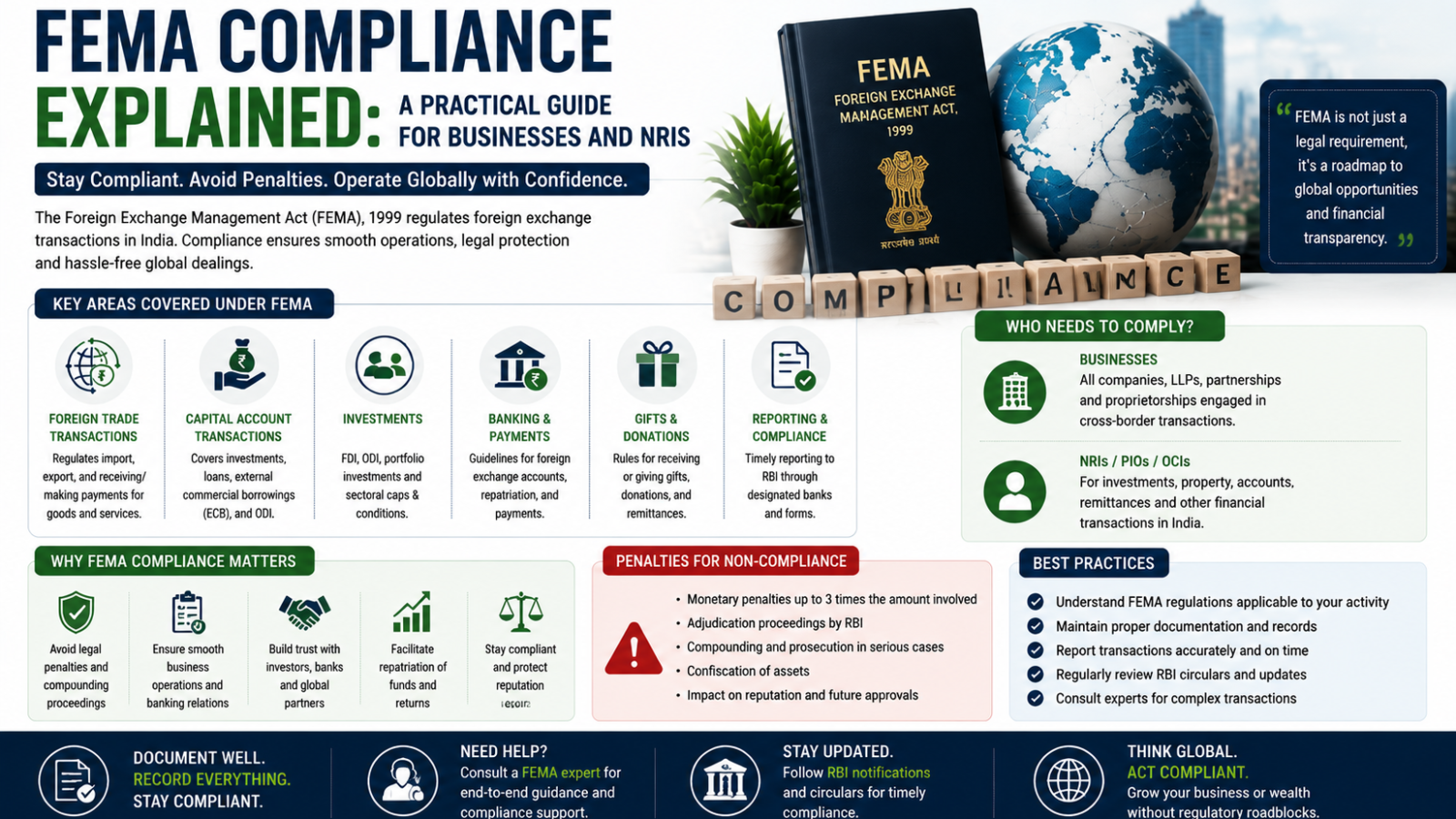
The Foreign Exchange Management Act (FEMA) provides the legal framework for managing foreign exchange transactions in India. It regulates transactions involving foreign currency, overseas investments, international remittances, foreign assets, and dealings between residents and non-residents.
The primary objective of FEMA is to facilitate international trade while ensuring proper management of foreign exchange resources.
Why FEMA Compliance is Important
Every cross-border transaction is governed by specific FEMA regulations. Failure to comply with these rules may result in regulatory scrutiny, financial penalties, or delays in obtaining necessary approvals. Businesses engaged in foreign investment, import-export activities, overseas borrowing, or international collaborations should understand the applicable FEMA provisions before entering into any transaction.
Proper compliance also improves business credibility with banks, investors, and regulatory authorities.
Businesses Covered Under FEMA
FEMA regulations apply to a wide range of businesses and individuals involved in international financial transactions. This includes companies receiving foreign investments, businesses making overseas investments, exporters, importers, startups with foreign shareholders, multinational companies, and NRIs investing or conducting financial activities in India.
Understanding whether FEMA provisions apply to your business is an important step toward regulatory compliance.
Common Transactions Governed by FEMA
Several financial activities fall under FEMA regulations, including foreign direct investment (FDI), overseas direct investment (ODI), external commercial borrowings, import and export payments, acquisition or transfer of foreign assets, remittances, property transactions involving NRIs, and investment in Indian companies by foreign investors.
Each transaction is subject to specific reporting and compliance requirements.
Importance of Proper Documentation
Maintaining complete documentation is one of the key aspects of FEMA compliance. Businesses should preserve investment agreements, foreign remittance records, banking documents, board resolutions, regulatory approvals, financial statements, and transaction records. Proper documentation ensures smooth regulatory reporting and simplifies future audits or inspections.
Risks of Non-Compliance
Failure to comply with FEMA regulations can result in financial penalties, transaction delays, regulatory notices, and reputational risks for businesses. Incorrect reporting, unauthorized foreign transactions, delayed filings, or incomplete documentation are among the common reasons for FEMA-related compliance issues.
Timely compliance helps businesses avoid unnecessary legal complications.
FEMA Compliance for Growing Businesses
As businesses expand globally, FEMA compliance becomes increasingly important. Companies planning to receive foreign investment, establish overseas subsidiaries, collaborate with international partners, or raise funds from foreign investors should develop strong compliance systems from the beginning.
Early planning helps businesses complete transactions efficiently while meeting regulatory expectations.
Role of Professional Advisory Services
FEMA regulations involve technical legal and financial requirements that require careful interpretation. Chartered Accountants and financial advisors assist businesses with FEMA compliance, regulatory reporting, foreign investment structuring, documentation, transaction advisory, and liaison with regulatory authorities. Professional guidance reduces compliance risks while supporting smooth international business operations.
Conclusion
FEMA plays a vital role in regulating India’s foreign exchange transactions and international financial activities. Whether you are an NRI managing investments or a business expanding globally, understanding FEMA compliance is essential for conducting cross-border transactions legally and efficiently. By maintaining proper documentation, following regulatory requirements, and seeking professional guidance, businesses and individuals can confidently manage their international financial activities while remaining fully compliant with Indian regulations.

Add a Comment