
Introduction
Goods and Services Tax (GST) registration is one of the first compliance requirements for businesses that meet the prescribed eligibility criteria. A GST registration allows businesses to collect GST from customers, claim Input Tax Credit (ITC), and operate legally under the GST framework.
Whether you are starting a new business or expanding an existing one, understanding the GST registration process can help you avoid delays and ensure smooth compliance with tax regulations.
What is GST Registration?
GST registration is the process through which a business obtains a unique Goods and Services Tax Identification Number (GSTIN) from the tax authorities. Once registered, the business becomes a recognized GST taxpayer and is required to comply with GST rules, including filing returns, maintaining records, and paying applicable taxes.
Who Should Register for GST?
GST registration is mandatory for businesses and individuals who meet the prescribed turnover limits or fall under categories where registration is compulsory under GST law. It is also required for businesses involved in interstate supply, e-commerce operations, import or export activities, and certain notified services.
Even if registration is not mandatory, many businesses choose voluntary registration to improve credibility and claim Input Tax Credit.
Benefits of GST Registration
Registering under GST offers several advantages to businesses.
- Operate legally under the GST system.
- Claim Input Tax Credit on eligible purchases.
- Expand business across different states.
- Improve business credibility with customers and suppliers.
- Participate in government and corporate tenders.
- Avoid penalties for non-compliance where registration is mandatory.
Documents Required for GST Registration
Before applying for GST registration, keep the following documents ready:
- PAN Card of the business or applicant.
- Aadhaar Card.
- Business registration proof.
- Identity and address proof of promoters or partners.
- Passport-size photographs.
- Business address proof.
- Bank account details or cancelled cheque.
- Digital Signature Certificate (where applicable).
- Authorization letter or board resolution, if required.
Step-by-Step GST Registration Process
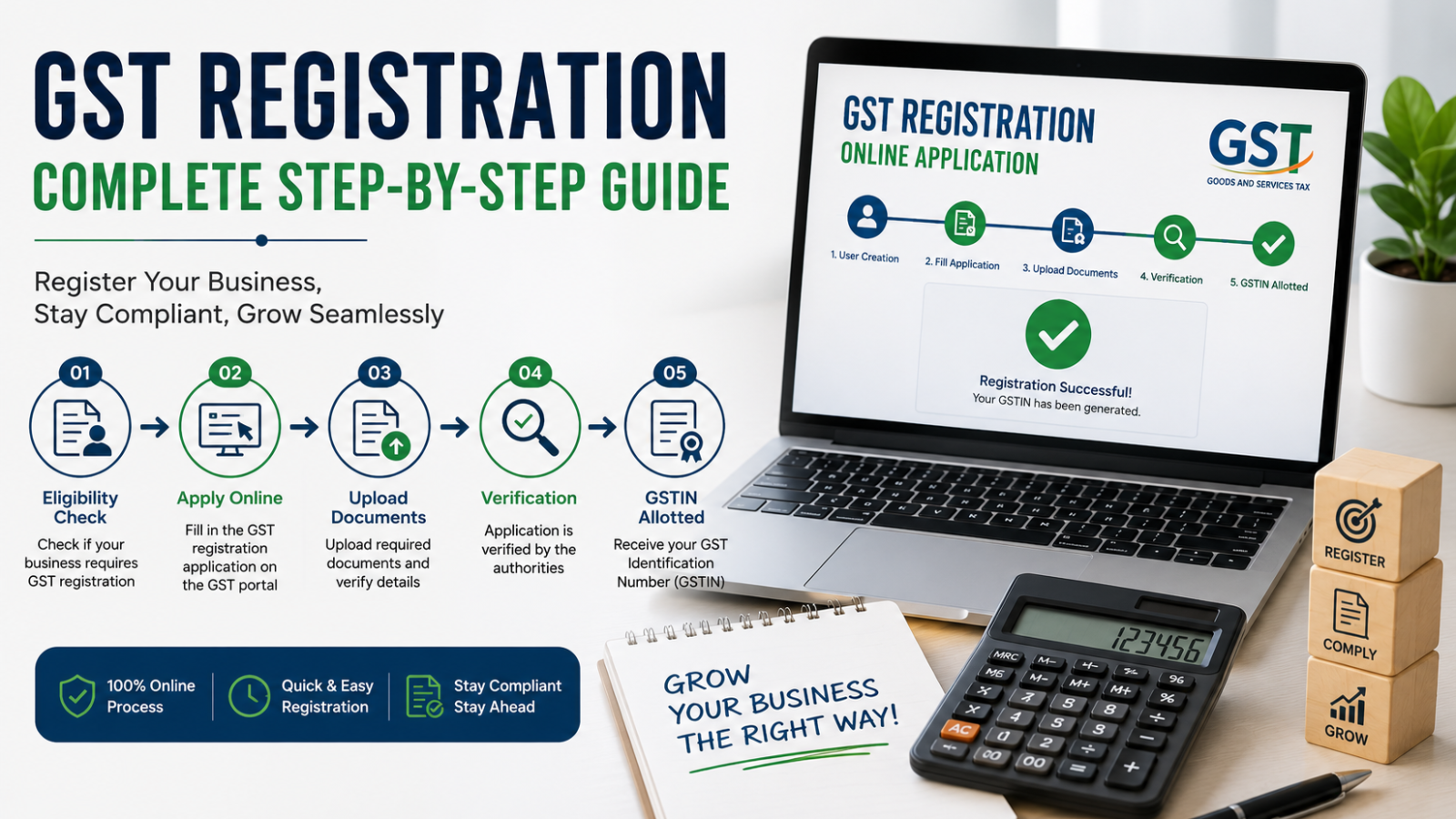
Step 1: Check Your Eligibility
Determine whether your business is required to register under GST based on turnover, business activity, and applicable legal provisions.
Step 2: Collect Required Documents
Gather all necessary business and personal documents before beginning the registration process. Accurate documentation helps avoid delays.
Step 3: Complete the GST Registration Application
Fill in the registration application with correct business details, contact information, business activities, bank details, and authorized signatory information.
Step 4: Upload Supporting Documents
Upload all required documents in the prescribed format. Ensure that the uploaded documents are clear, valid, and match the information provided in the application.
Step 5: Verification of Application
The submitted application is verified by the concerned tax authority. If additional information or clarification is required, the applicant may need to respond within the specified timeline.
Step 6: Receive GSTIN
Once the application is approved, the business receives a unique GST Identification Number (GSTIN) and the GST Registration Certificate, allowing it to conduct business as a registered GST taxpayer.
Responsibilities After GST Registration
After obtaining GST registration, businesses are required to comply with various GST obligations. These include issuing GST-compliant invoices, filing GST returns within the prescribed due dates, maintaining proper books of accounts, paying applicable taxes on time, and preserving business records as required under GST law.
Common Mistakes to Avoid
Many businesses face delays because of incorrect information or incomplete documentation during the registration process. Common mistakes include providing inaccurate business details, uploading invalid documents, entering incorrect bank information, selecting the wrong business category, or failing to respond to queries raised during application verification.
Carefully reviewing the application before submission helps ensure faster approval.
Why Professional Assistance is Beneficial
Although the GST registration process is straightforward, businesses often require professional guidance to determine eligibility, prepare documentation, select the correct business classification, and ensure compliance with GST regulations. A Chartered Accountant can assist with the registration process while helping businesses avoid errors that may lead to delays or future compliance issues.
Conclusion
GST registration is an important step for businesses operating under India’s indirect tax system. It not only ensures legal compliance but also enables businesses to claim Input Tax Credit, expand operations, and build trust with customers and suppliers. By understanding the registration process, maintaining accurate documentation, and complying with GST requirements, businesses can complete registration smoothly and focus on long-term growth.

Add a Comment