
Introduction
Every business operating in India is required to comply with various legal, financial, and regulatory requirements throughout the year. Timely compliance not only helps businesses avoid penalties but also builds trust with customers, investors, financial institutions, and government authorities.
Maintaining a structured compliance checklist ensures that no important filing or statutory obligation is missed.
What is Business Compliance?
Business compliance refers to fulfilling all statutory obligations applicable to a business, including tax filings, financial reporting, regulatory filings, employee-related compliance, and maintenance of prescribed records under various laws.
Compliance requirements differ based on the type of business, industry, and legal structure.
Why Annual Compliance is Important
Timely compliance helps businesses operate legally while avoiding unnecessary penalties and legal disputes. It also strengthens financial credibility, supports smooth business operations, and improves the company’s reputation with stakeholders.
Important Compliance Areas
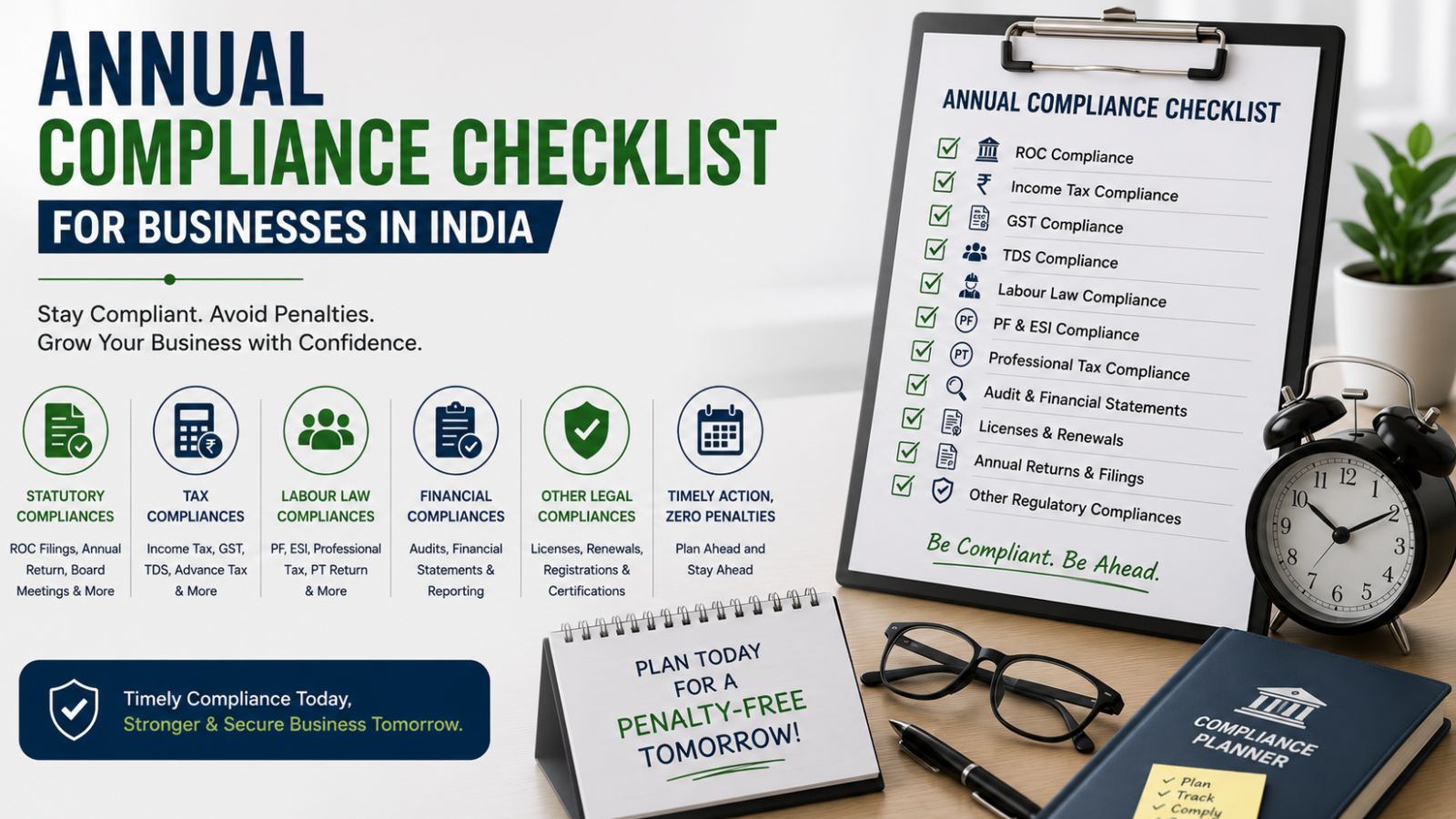
Businesses should regularly monitor compliance related to Income Tax, GST, TDS, payroll, ROC filings, financial statements, statutory audits, professional tax, labor laws, and maintenance of books of accounts. Each compliance requirement has prescribed due dates that should be carefully monitored.
Financial Compliance
Businesses should prepare accurate financial statements, reconcile bank accounts, maintain accounting records, verify outstanding liabilities, review receivables, and preserve supporting financial documents. Proper financial reporting ensures transparency and facilitates smooth audits.
Tax Compliance
Tax compliance includes timely filing of Income Tax Returns, GST returns, TDS returns, payment of applicable taxes, reconciliation of tax records, and responding to any notices received from tax authorities. Delays may result in interest, penalties, and additional compliance requirements.
Corporate Compliance
Companies and LLPs must comply with various corporate regulations, including annual filings, board meeting documentation, statutory register maintenance, director-related compliance, and submission of prescribed forms to regulatory authorities wherever applicable.
Employee Compliance
Businesses employing staff should ensure timely salary payments, payroll processing, employee tax deductions, provident fund contributions, employee insurance compliance, leave records, and other applicable labor law requirements.
Common Compliance Mistakes
Businesses often miss filing deadlines, maintain incomplete records, ignore reconciliations, delay tax payments, or fail to preserve statutory documents. These mistakes can lead to penalties, notices, and unnecessary legal complications.
How Professional Compliance Support Helps
A Chartered Accountant helps businesses stay updated with changing regulations, monitor compliance calendars, prepare financial reports, file statutory returns, maintain proper records, and ensure complete compliance with applicable laws. Professional support minimizes compliance risks and allows businesses to focus on growth.
Conclusion
Annual business compliance is an essential part of running a successful organization. Maintaining accurate records, filing returns on time, and meeting all statutory obligations help businesses remain legally compliant and financially organized. A proactive approach to compliance reduces risks, improves operational efficiency, and supports sustainable business growth.

Add a Comment